Engineered Wood Vs. Solid Wood

Engineered Wood Flooring
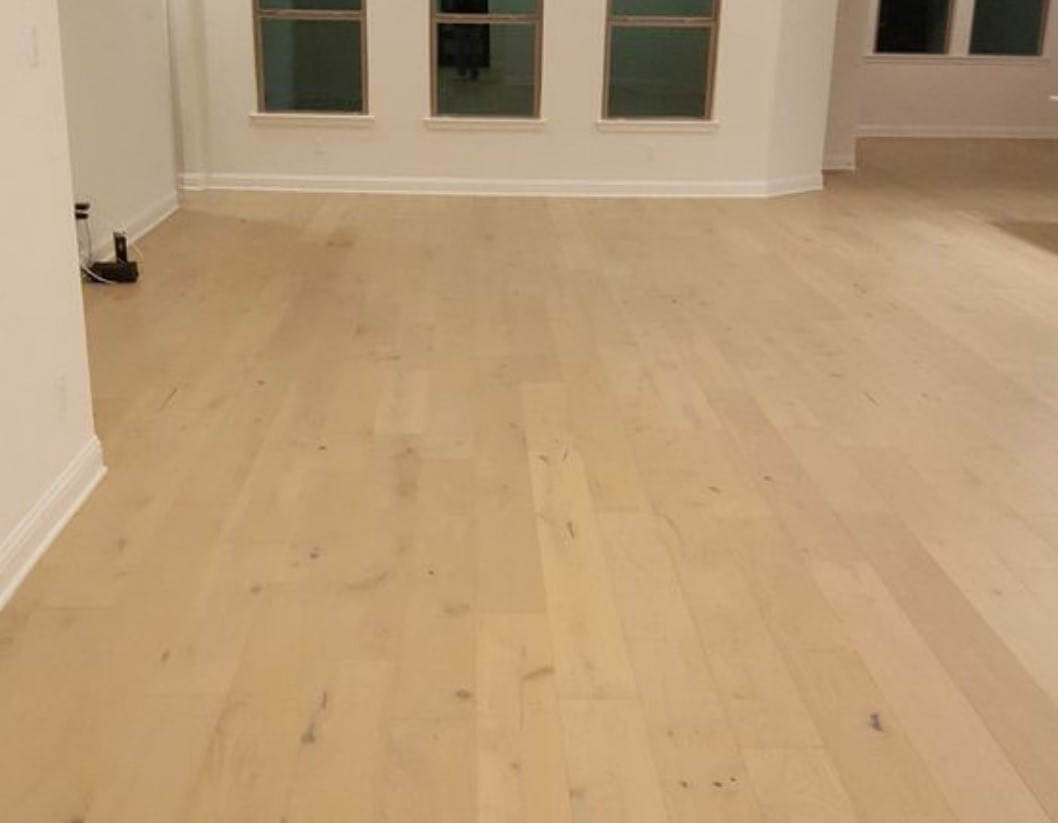
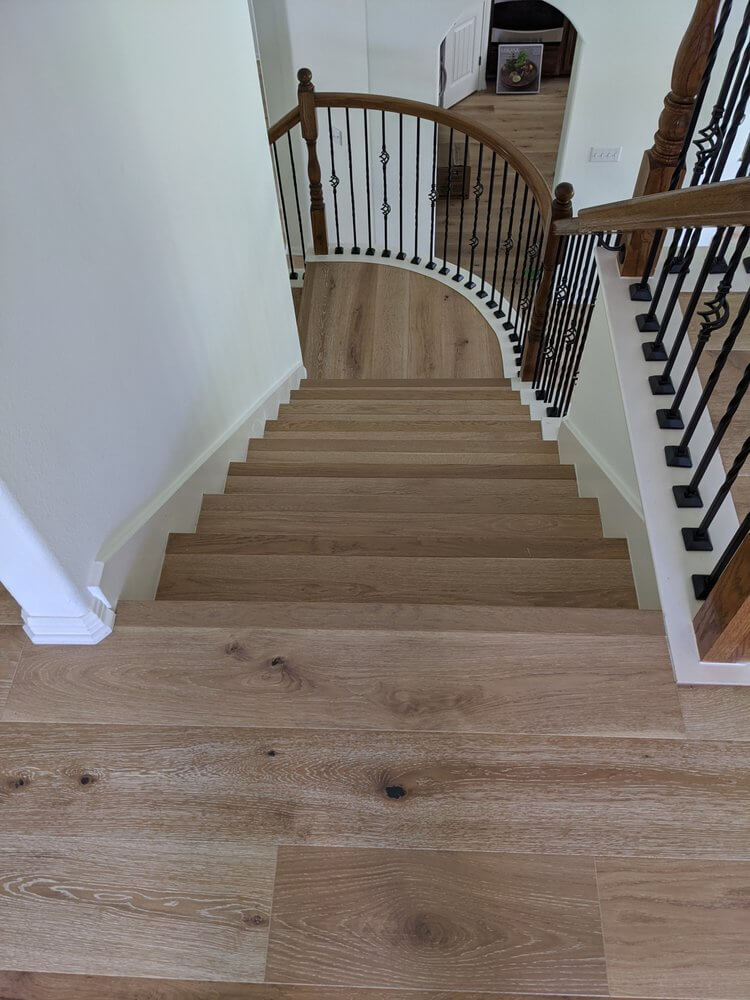
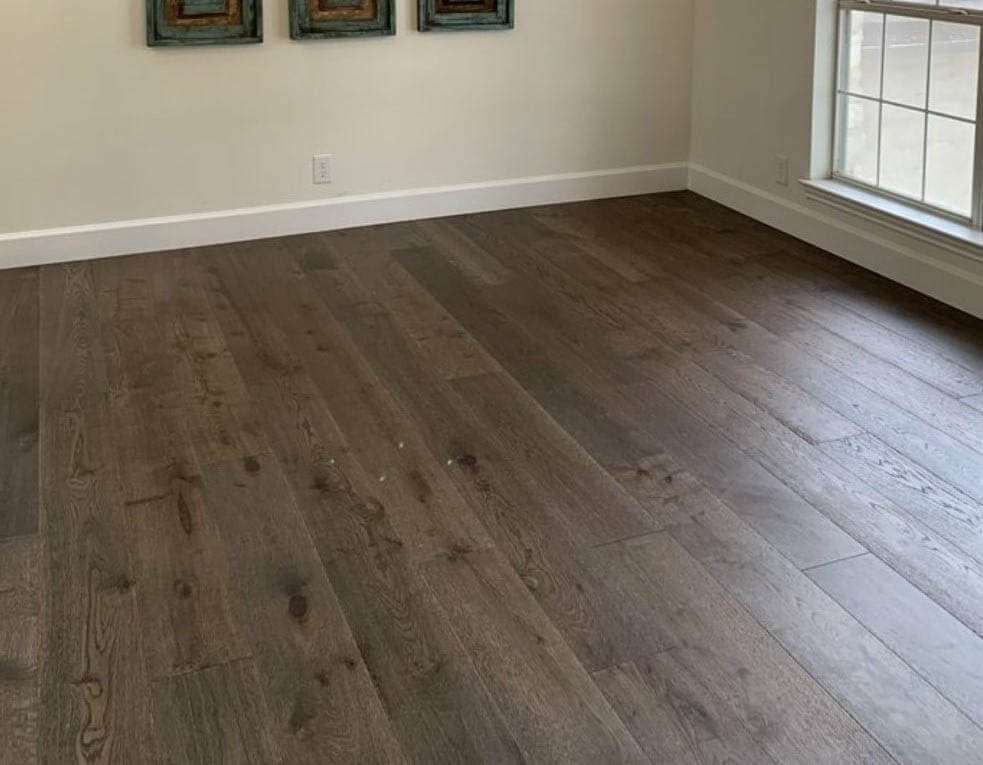
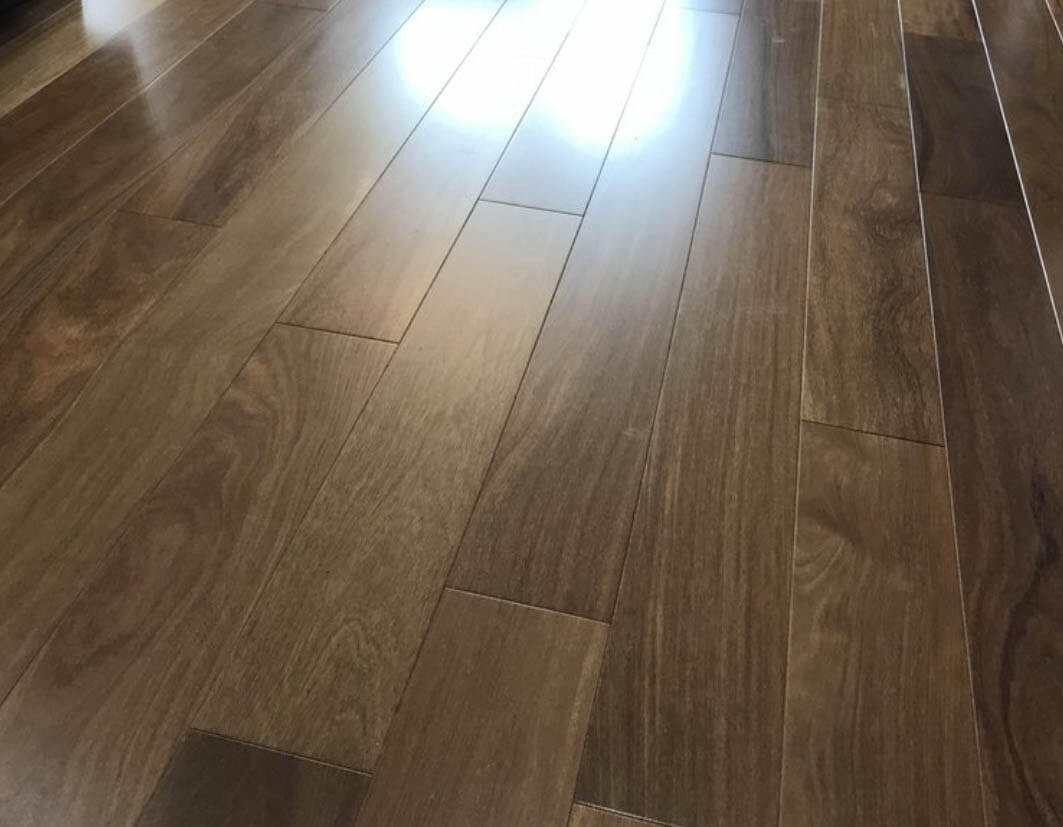
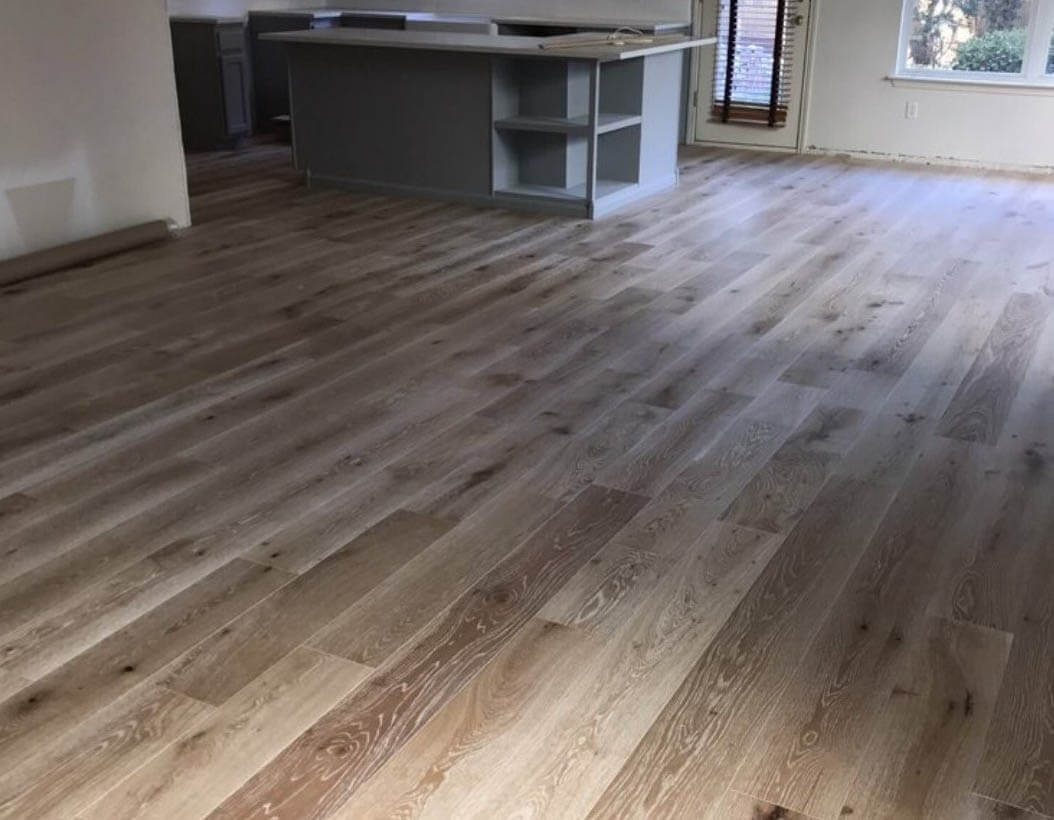
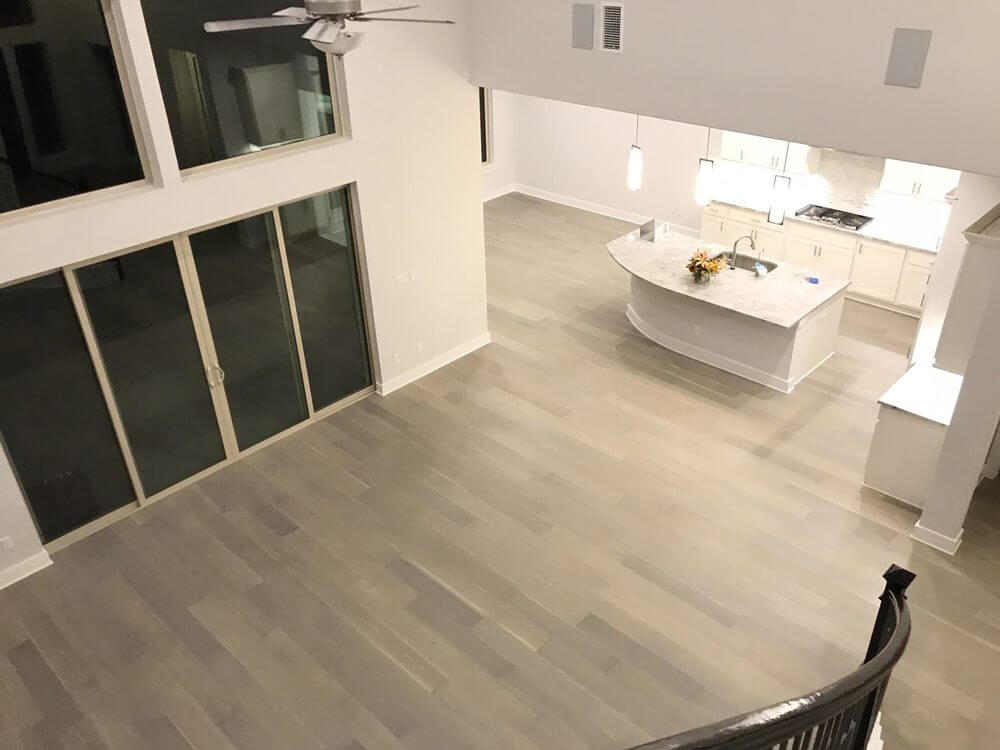
Engineered flooring is Engineered wood where only the first layer is solid wood and the rest is a criss cross plywood. It is used for all grades above and below, concrete slab or ply-wood. This makes a perfect floor because its very stable. The criss cross layers below the solid piece of wood acts as a stable foundation, making it very stable against moisture and elevated levels of humidity. It acts as a 3:1 moisture barrier between your concrete and hardwood. Most engineered flooring have pretty good thick tops you can sand just as much as a solid. You can't sand past the tongue anyway whether it be a solid or engineered. Plus most if not all engineered hardwood finishes are heat treated at the factory, making the finish 4 times stronger that traditional poly-urethane. That's the reason why most engineered flooring come with a 20 - 30 year wear warranty. The heat treated process cannot be duplicated on site.
Solid Wood Flooring
A solid wood pre-finished or un-finished wood is when a piece of wood is solid from top to bottom. This plank gets nailed down on a wooden sub-floor. It cannot be installed in a concrete surface house. No matter what anyone says, a solid is only designed to be nailed on a peer and beam housing. An expansion gap is important because solid wood expands and contracts easily. Solid wood floors are meant to get nailed down on top of peer and beam homes. Companies install 3/4" inch plywood on top of concrete flooring all the time and nail down the solid hardwood on top of the plywood. This would act as a base so that a solid can be nailed down onto the plywood. Although this method is practiced on top of a concrete flooring, this method is not recommended by us in anyway. Solid wood floors are meant to be nailed on top of pear and beam foundations where the building is constantly breathing and is not dependant upon an A / C unit to keep it ventilated. Any house that has a concrete floor, will always depend on the A / C unit to keep the artificial environment consistent. Once this changes for any reason like in example:
Any house with windows closed and no A/C running or a poor A / C unit is just like a green house! This means the humidity levels will rise, and the nature of wood is to do what? Its to absorb water.
- your A / C unit goes out
- you sell your house its on the market and you turn off the A / C unit.
- You leave house window open and its very humid outside
- Your A / C unit is always running, but its just poor ventilation, or not enough ventilation
- You take a vacation and you turn A / C unit off
- Your house is just to humid for what ever reason
The risks involved are too high. Its just not worth it. Why spend thousands of dollars on a project and have to replace it later because you did not install engineered flooring on your concrete slab.
Here are some helpful facts and myths about engineered hardwood flooring.
Myth #1 - Engineered flooring is not real.
Fact #1 - Engineered Flooring is real wood! Engineered flooring consists of a decorative hardwood veneer atop plies of premium quality, hardwood plywood. Even an HDF core is real wood that has been compacted into a dense, impact-resistant format.
Myth #2 - Engineered flooring is cheap and won’t last.
Fact #2 - Engineered flooring can be economical, but durability is not compromised. Multi-ply hardwood or high-quality HDF cores provide structural stability. Engineered products have premium quality finish to protect the hardwood veneer and resist normal wear and tear. Warranties of 30 or 50 years show that this flooring is built to last.
Myth #3 - Engineered flooring looks bad & my neighbors will know I didn’t buy solid wood.
Fact #3 - Solid wood floors are designed to get nailed down on a peer and beam subflooring. Solid wood flooring should never get nailed inside a home that is on top of slab or concrete foundation. The green house affect can make a solid wood floor cup.
Myth #4 - Engineered flooring can’t be refinished.
Fact #4 - Engineered flooring with veneers of 2mm thickness or more can be refinished at least once. Veneers of 0.6mm cannot be refinished, but flooring can usually be professionally buffed or polished to remove surface scratches and renew luster.
Myth #5 - Engineered flooring is more complicated to install.
Fact #5 - With proper milling, Engineered flooring is no more difficult to install than Solid Hardwood flooring. In fact, Engineered flooring is very popular with DIY customers and convenient Quick Clic options provide fast, easy flooring solutions for every budget.
-
A solid wood that is 3/4 inch thick needs to be nailed to a wooden subfloor. If going over concrete a 3/4 inch plywood subfloor must be installed first. Roofing paper then gets installed for a sound barrier and moisture protection. Special thicker pad is also available for a softer step and knee friendly approach.

A 1/2 inch solid wood may be glued down onto a concrete slab only and after a concrete sealer is applied over your concrete.
An engineered floor requires no moisture barrier because it's already on top of criss-cross multiply wood glued together. This allows a 3-1 moisture protection ratio.
2. How do I clean and maintain my hardwood floors?
Use a swiffer, vacuum, or a very damp mop. Never wet mop a hardwood floor. Look for the manufactures recommendations on what type of cleaner to use.
3. What is a laminate floor?
A laminate floor is a picture of a hardwood floor. Usually the floors are made of synthetic backing for its base and a high-pressure laminate surface has been applied. These floors are not repairable because you cannot resand them. Manufacturers usually carry a 10-20 year wear layer guarantee. Some manufacturers also offer a fade and stain warranty. Often these floors can be clicked together for easy installation. A laminate floor is not a real hardwood floor. It is only immitation, but can be economical. Laminate flooring in Austin Tx is something we can help with
4. What is a floating floor?
A floating floor is wood floor, or a laminate that has no adhesive in between the subfloor and the actual wood floor. Generally, a pad is placed in between the subfloor and wood floor. A floating floor is ideal and recommended for when you have vinyl or ceramic that cannot be removed and has to be covered by woodfloor. Sometimes commercial or office areas have restrictions but you do not have to be limited because a floating floor is a good option. We have alot of floating floors to choose from. The Versini line offers alot of wood flooring that is desinged to float. It comes in a snap together design. -
5. Can I put solid wood flooring on concrete floor?
Concrete is not suitable for a solid wood plank. A wood subfloor is much more suitable for a solid wood floors, because usually solids are 3/4 in. thick and get nailed down with a neumatic 3/4 woodfloor nailer. Underneath the 3/4 wood flooring, a black felt is usually installed. Other than the felt, a 15 lb. roofing paper can also be used. There are different types of padding. Some manufactures make padding with extra cushion. Extra cushion in a woodfloor can be a good thing because it is softer on your knees in the long run. The National Woodflooring Association recommends you do not glue a solid to a concrete floor. If you absolutely must have to, a concrete moisture barrier must be applied first before proceding to install. Here are 2 ways this can be achieved:- First 6 mil of polyethaline, or black/clear plastic is installed. Next a 3/4 in. subfloor CDX is nailed down with a 22 or 27 caliber nail gun every 8 sq. in. Next, a black felt paper [intalling this helps reduce the squeeking between wood floor and the 3/4 in. subfloor. Then the wood floor gets nailed down. The only issue with this is that your floor gets raised about 1 1/2in. Now the other option is this:
- A chemical moisture sealer has to be applied. Each manufacturer recommends its own type of sealer. Normally, this sealer gets applied to your concrete floor and it has to dry first which usually takes around 24 hours before being able to apply the glue. Once this has taken place then can a 1/2 in. or below solid hardwood floor can be installed.
6. Can you glue down wood flooring on top of?
(ex. upstairs)
The answer is yes, only if your subfloor is CDX plywood or above. Always make sure that your sub-floor is clean and free of debris. If your sub-floor is uneven you must level it off. A good way to level off a sub-floor is to always make sure to use a straight edge and find the low spots. If you have low spots, they must be filled with float. A high spot can be sanded down of shaved down to meet industry standards.
7. What about bamboo?
Bamboo is a very poplular product for which many mistake as a hardwood, but in reality it is a type of grass, not a hardwood. Bamboo can be softer than Red Oak and may not be resanded. Click here for your
8. What is cupping or buckling? - First 6 mil of polyethaline, or black/clear plastic is installed. Next a 3/4 in. subfloor CDX is nailed down with a 22 or 27 caliber nail gun every 8 sq. in. Next, a black felt paper [intalling this helps reduce the squeeking between wood floor and the 3/4 in. subfloor. Then the wood floor gets nailed down. The only issue with this is that your floor gets raised about 1 1/2in. Now the other option is this:
- Satin-a low sheenSemigloss- a medium sheen (most hardwoods come this way
- Gloss- a high gloss
Back to Top ^
Reclaimed flooring
Reclaimed hardwood is the term used when a wood floor is reclaimed or salvaged as it was probably from an old barn from the American Revolution. It was probably salvaged from a deconstruction, used railroad ties, siding from an old house, old beams from Chicago or an old factory
Reclaimed flooring in Austin Texas is the term used when a wood floor is reclaimed or salvaged as it was probably from an old barn from the American Revolution. Similar to rustic flooring or
handscraped flooring reclaimed flooring may have some history behind it. It can be wood that has been salvaged from a deconstruction, used railroad ties, siding from an old house, old beams from Chicago or an old factory, or sometimes it can be from sunken logs. Sunken logs or "recovered wood" is another term used differently than "reclaimed wood". The reason is that sunken wood never made it to a processing factory, so its was never used. Another term used is "virgin wood". This type of wood has no nail holes or any kind of history to go with it. Some people might prefer this over the reclaimed flooring and vise versa. It also can come from forest salvaged projects. This can be standing dead tress caused from storms or removed from forest due to urban expansion. These trees are then salvaged in turned into reclaimed flooring.
Reclaimed wood floors use to have some kind of use in the past. Buildings build in the United States in the last 2 centuries used wood as the main structural source. These buildings are now being demolished and wood that comes out of them is being turned into recycled or reclaimed hardwood. Taking advantage of the buildings resources and reusing them again for a different life is a fantastic way to recycle hardwood.
Sometimes people might go locally and reclaim an old barn or an old factory beam. Other people might travel across the globe in search of the perfect floor. Of coarse different regions on the earth will yield different species. For example places in the Pacific Northwest might be yield locally Douglas Fir. While Chestnut, elm or oak might be found more in the Midwest region. Other regions across the globe like in Asia might yield Teak since old buildings there are made of this type of wood.
Reclaimed hardwood is also used in things like furniture, and counter tops.
The Benifits of Reclaimed Flooring
The benefits is that it is environmentally friendly. The idea of preserving the forest and avoiding the landfills from wood that comes from these old buildings is a plus.
Hand Scraped Wood Austin TX
The handscraped hardwood has the worn look feature with scraped edges and imperfections. This type of plank will hide scratches and dents more than a smooth surface finish. This type of wood resembles the way 100 year old floor will look after it has been walked on for nearly a century.
Rustic wood flooring Austin TX
Rustic hardwoods or the distressed floor used when referring to the worn look of wood floors. Mistaken for the handscraped floor, rustic flooring gives a floor character. Manufactures also consider rustic wood flooring the last of the grade. It does not mean that there is anything wrong with the floor, it just means that the style is different. Million dollar homes install this type of flooring all the time.
Smooth Finish
This type of plank is smooth to the touch and eye. It usually has no imperfection of the top layer surface. The top has been sanded in the factory or in place then finished out making the floor shine due to its smooth surface. Usually this type of flooring may require extra care to protect it from scratching.
Austin Hardwood Brands
Back to Top ^Armstrong, Bruce, Mullican, Mannington, Mirage, Anderson, Ecotimber, Johnson Hardwood, Butler Johnson, Earthwerks, Bluelinks, Award, Century Flooring, Diamond W, Expanko, Factory Direct, Florida Flooring, Hartco, Galleher, Kahrs, Lauzon, BR111, LM Flooring, Scandian, Longust, Pinnacle, Mastercraft, Columbia, MD Building Products, Expanko, Mohawk, Robbins, Oshosh Designs, Renaissance, Shaw industires, SMT, Swedeco, Tarkett, Teragren, Tom Duffy, US Floors, Wincanders, and Woods of Distinction, Versini. For a free in home flooring estimate, call us or use the contact form on top.
We are an Austin Tx Hardwood Flooring supplier to our costumers with one of the widest selections of hardwoods available. When it comes to selection, our supplier is one of the leading hardwood floor supplier in the state with over 1,000 different wood flooring samples, styles and colors. We carry engineered, and 3/4" inch solid hardwood products at very affordable prices. Wide 8" plank to the narrow 2 1/4" inch Brazilian Cherry Hardwood, Brazilian Teak, Red Oak hardwood, Brazilian Walnut Wood, American Walnut Flooring, .
Hardwood is suitable for any room except for a full bathroom. It is also good for kitchens. Any water spilled should be picked up promptly. Consider using mats near your sinks. Bamboo is also a good product for your kitchen since it is also a grass not a hardwood. Consider using the Teragren product since its 25% harder than red oak and 12% harder than maple. Since bamboo is a grass, it does not absorb water the way wood does.
We carry hard wood floors from around the world for any residential, commercial remodel or new construction project. Fine Hard Wood Floors, exotic hardwood flooring, handscraped, reclaimed, rustic floors at affordable prices in our Austin hardwood flooring store located in central Texas. Wood Floors Austin with Brazilian Walnut, Walnut Flooring, Oak Flooring,
Brazilian Teak, Brazilian Cherry are the top 5 wood floor types. Hardwood flooring Austin is what we do best. If you have cats or dogs we have available options. The biggest wood floor covering selection in Texas
Hardwood Floor Janka Hardness Chart Back to Top ^
![]() |
When in doubt you can always look up the hardness of a wood floor in the hardness chart below. The janka chart is measured by a metal ball test dropped on wood.
Hardwood Flooring FAQ's
Back to Top ^
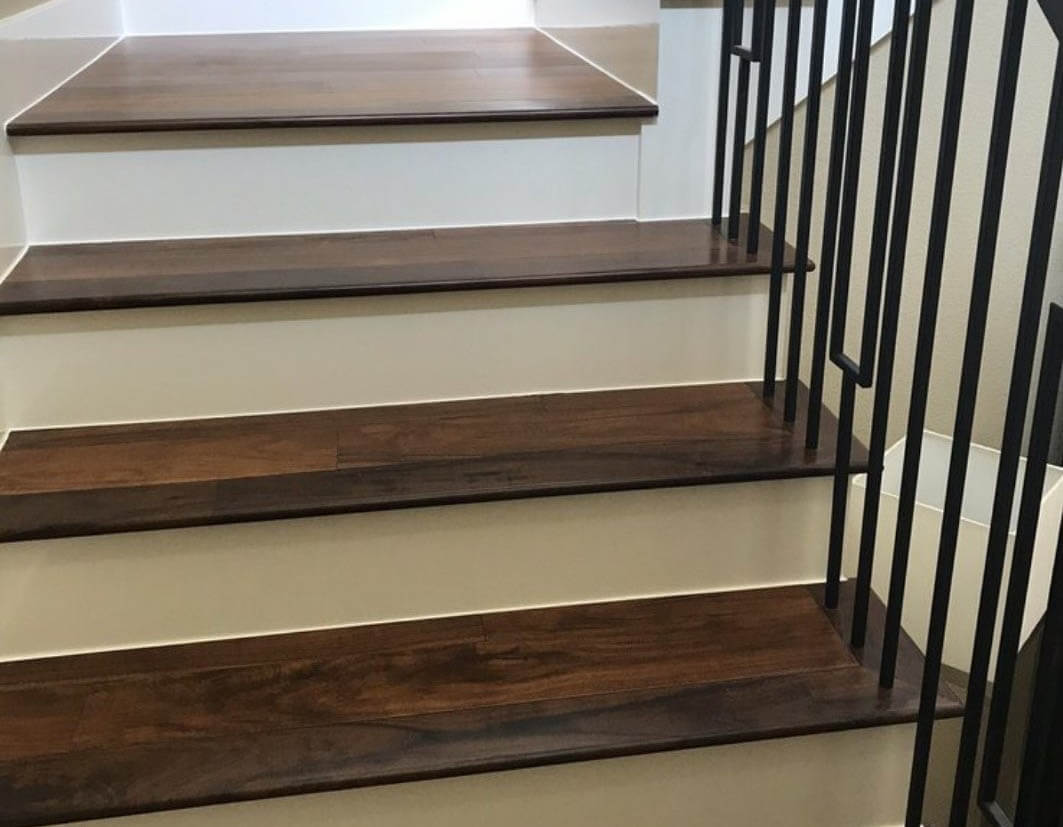
| Stairnose | ![]() |
The stair nose is the molding that goes in front of the wood over laping the facing or riser of a step. This piece makes up the edge of a step. | |
| T-mold | A t-molding is the piece of molding that goes in between the wood floor and tile or carpet and other suitable similar flooring such as other wood flooring | ||
| Reducer | ![]() |
![]() |
A reducer is a molding that goes in between the wood floor and a flat surface. This allows a smooth ramp to the wood floor |
When in doubt, you can always count on our frequently asked questions and answers list. If your question is not listed or is not answered to your satisfaction, feel free to contact us.
1. What is the difference between solid wood and engineered wood?
A solid wood is when a piece of wood is solid from top to bottom vs. Engineered wood where only the first layer is solid wood and the rest is a criss cross plywood.
![]() |
![]() |
|
This wood floor is cupping |
This wood floor is buckling |
9 What about the gloss of a hardwood?
The shine on a hardwood depends on the manufacturer, there are usually 3 catagories:
Which type of gloss you decide to get depends on personal preference.
10. What is distressed hardwood?
A distressed hardwood is wood that has been handcarved either by hand or by machine. This hand carved facing tends to give wood a sort of rustic, restored worn look with lots of character. This floor is perfect for pets because if you scratch it, you can always stain the scratch with a stain pen and it looks like part of the rest of the wood These floors have a warm feeling to them and are becoming more,and more popular. There is also handsculpted wood flooring too.
11. What is a sand and finish?
A sand and wood floor is a wood floor that was installed with out a finish,and sanded in place then coated with urethane. This method of installing can be more expensive and is proned to wear and scratch easier. It is important to remember that some factory finishes are treated with aluminum oxide then undergo a heating process which hardness the finish, this process is not duplicatable. Recently manufacturers came out with a pre-finished wood floor that can be installed together looking like a sand and finished floor. Another term to describe a sand and finish floor is seam-less floor.
12. What goes in between my wood floor and my baseboard?

Quarter-round or shoemolding. The expansion gap, generally 1/4" gets covered up by this type of trim.
13. Is hardwood suitable for any room?
Hardwood is suitable for any room except for a full bathroom. It is also good for kitchens. Any water spilled should be picked up promptly. Consider using mats near your sinks. Bamboo is also a good product for your kitchen since it is also a grass not a hardwood. Consider using the Teragren product since its 25% harder than red oak and 12% harder than maple. Since bamboo is a grass, it does not absorb water the way wood does.
14. Is will hardwood floor increase the value of my home?
The answer is yes! Hardwoods will definetly increase and raise the market value of a home. A hardwood floor is an investment.
15. What should I do prior to installation?
The process for preparation of a hardwood floor is simple. First, let the wood floor acclimate in a controlled enviroment if its a solid. This means inside your house NOT YOUR GARAGE. Never deliver wood in the rain or snow. The boxes do not have to be open since they come with small holes for air flow..
16. Do hardwood floors change color?
All hardwood floors age in time and change color, some more than others. Most of the exotic hardwoods may do this in a more drastic way. This is a normal process for woodfloors for it is a natural color. Brazilian Cherry and Tigerwood are good examples of the two most drastic color changing woods. If you go to our gallery, you will see before and after pictures of the same floor in the same house after eight months of installation. Once a Brazilian Cherry floor has reached its peak it no longer darkens. The process, in general, can take about one year.
Back to Top ^